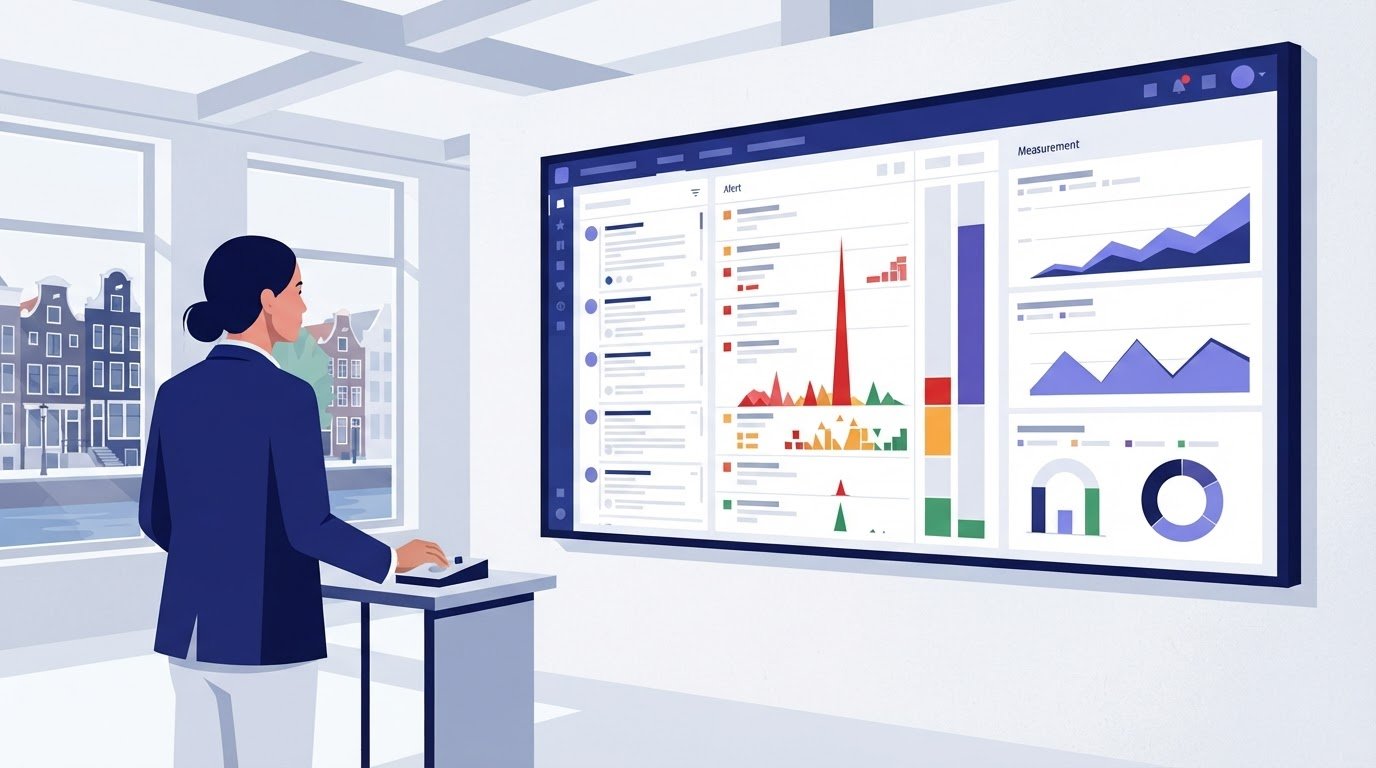
A brand can be discussed far beyond its own social media accounts. The right brand monitoring tools for social media track mentions, products, keywords and phrases across relevant platforms, while broader monitoring can bring other digital channels into view. The best fit depends on whether you need listening, publishing, attribution, competitor tracking or cross-channel coverage.
It’s easy to assume that brand monitoring tools for social media simply collect mentions in one dashboard. A useful comparison also distinguishes monitoring from publishing and shows how each tool’s coverage and reporting can support your decisions.
This guide explains what social media monitoring covers and compares tools by their strengths and practical fit. Learn how to weigh platform coverage, cross-channel listening, competitor tracking, and attribution so you can narrow your options to the work your team needs to do.
Key Takeaways
- Match monitoring features to your goal: listening, publishing, attribution, or competitor analysis each calls for different capabilities.
- Compare platform coverage and update speed, then assess whether sentiment analysis reflects context rather than just word choice.
- Use share of voice to compare brand conversations with competitors, while keeping keyword selection and reporting consistent.
- Start with 2-3 tools that fit your needs and budget, and consider whether social listening should connect with other digital media coverage.
What is social media monitoring?
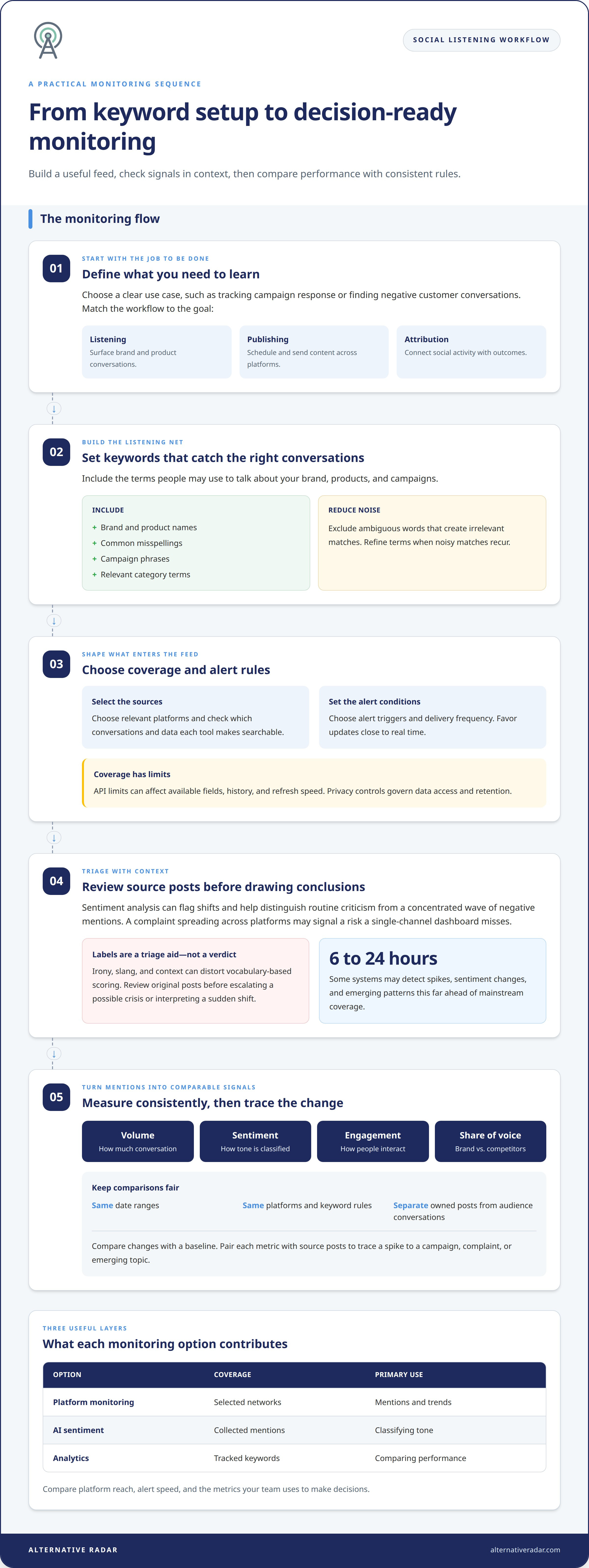
Social media monitoring tools collect and index mentions across supported platforms, making conversations searchable. API limits can affect available fields, history, and refresh speed, while privacy controls govern data access and retention.
Emerging-Platform Coverage and AI Sentiment
Emerging-platform coverage shows whether monitoring reaches newer audience spaces, not only established networks. Most major tools added TikTok support by 2024. AI sentiment analysis classifies mentions and flags shifts. Some systems may detect spikes, sentiment changes, and emerging patterns 6 to 24 hours before mainstream coverage. Compare platform breadth and detection speed separately.
Crisis Detection and Reputation Risk
Sentiment analysis can help distinguish routine criticism from a concentrated wave of negative mentions. A product complaint spreading across platforms may signal a reputation risk that a single-channel dashboard misses. Automated labels can support triage, but they are not a final judgment: irony, slang, and context can distort vocabulary-based scoring. Review source posts before escalating a possible crisis or interpreting a sudden shift in conversation.
Real-Time Alerts and Keyword Setup
Real-time alerts flag changes that may need a response, while keywords determine what enters the feed. Set up monitoring with brand and product names, common misspellings, campaign phrases, and relevant category terms. Exclude ambiguous words that create noise, then choose platforms, alert triggers, and delivery frequency. Favor updates close to real time, and refine your terms when irrelevant matches recur.
Measurement Frameworks and Analytics
Measurement frameworks make mentions easier to compare. Track volume, sentiment, engagement, and share of voice using consistent date ranges, platforms, and keyword rules. Separate brand-owned posts from audience conversations, then compare changes with a baseline. Pair each metric with source posts to trace a spike to a campaign, complaint, or emerging topic.
| Option | Coverage | Primary use |
|---|---|---|
| Platform monitoring | Selected networks | Mentions and trends |
| AI sentiment | Collected mentions | Classifying tone |
| Analytics | Tracked keywords | Comparing performance |
Choose based on platform reach, alert speed, and the metrics your team uses to make decisions.
Tool comparisons by use case, listening, publishing, and attribution
Compare monitoring tools by the work they support, not by feature count. Prioritize platform coverage, searchable conversations, reporting, and integrations that fit your team’s workflow.
Listening, Publishing, and Attribution Tools
Listening tools surface brand and product conversations; publishing tools schedule and send content across platforms. Some services combine both, but their workflows serve different needs. Attribution tools connect social activity with outcomes, helping teams assess which campaigns contribute to results. Social media monitoring services can centralize publishing across several platforms. Teams spending more than $100,000 per month on paid social should consider adding a dedicated listening tool.
Social Network and Online Source Coverage
Coverage varies by network and source, so compare the channels your audience uses with the data each tool makes searchable. Some tools focus on social conversations; broader media monitoring tools may include websites as well. Most major social media monitoring tools added TikTok support by 2024. Treat named options, including Talkwalker, as candidates to compare by coverage, update timing, and useful reporting rather than brand recognition alone.
Monitoring Strategy and Tool Selection
Start with a defined use case, such as tracking campaign response or finding negative customer conversations. Then shortlist two or three tools that match your needs and budget. Check that each covers relevant platforms and supports the workflow, such as listening, publishing, or attribution. A social media management platform may suit teams focused on publishing, while a dedicated listening tool fits deeper conversation analysis.
Free options can help you test basic workflows; paid plans may offer broader coverage or additional capabilities. Compare pricing based on factors such as users, monitored sources, data access, and reporting needs. Avoid paying for features your team won’t use.
| Option | Best-fit use | Comparison criterion |
|---|---|---|
| Listening tool | Track conversations | Source coverage |
| Publishing platform | Schedule content | Network support |
| Attribution tool | Connect activity to outcomes | Reporting capability |
Choose a combination that covers your priority channels and turns collected data into decisions.
Competitor monitoring and share of voice
Yes. A monitoring tool can track sentiment, share of voice, and trends if it captures relevant mentions and supports those analytics. For a useful benchmark, compare the same competitors, keywords, channels, and reporting period.
Competitor and Hashtag Monitoring
Competitor monitoring measures public conversations about your brand alongside selected rivals. Track comparable product names, campaign terms, and hashtags across the same channels. For example, a coffee company could compare mentions of its brand and competitors in a shared product category. This gives broader context than counting the company’s mentions alone, while keeping the comparison focused on relevant audiences and topics.
Hashtag monitoring helps discover posts beyond direct brand references. A campaign hashtag can surface audience posts that omit the company name, while a competitor’s branded tag can show how people discuss its campaigns. Social listening tools vary in their search controls and reporting capabilities, so consistent terms matter more than adding every trending hashtag.
Sentiment and Trend Tracking
Sentiment analysis can classify monitored mentions as positive, neutral, or negative, while trend reports show how those categories change over time. Share of voice compares a brand’s mentions with the total mentions tracked for its competitors and category. A common calculation is brand mentions divided by all tracked brand and competitor mentions, multiplied by one hundred. Treat the result as a relative benchmark, not a measure of market share.
For a useful comparison, define the competitor set, keyword rules, channels, and reporting period first. Then review changes alongside the posts behind them. A rise in negative mentions may reflect a specific product issue, while a hashtag spike may relate to a broader industry conversation. Assess tools such as Hootsuite by whether their monitoring capabilities meet these requirements, not by name alone. Keep the same criteria across reporting cycles to identify meaningful shifts in audience attention.
Brand monitoring across social media and digital channels
Social media captures only part of a brand’s public conversation. Monitoring services can track mentions of brands, products, keywords, and phrases across multiple platforms. With 5.75 billion users globally, social channels offer broad reach, but useful brand intelligence can also appear on websites, forums, and other media. Cross-channel monitoring connects those signals instead of treating each source as a separate workflow.
Coverage depends on the sources a tool can access and how it organizes them. Most major social media monitoring tools added TikTok support by 2024, but platform support alone doesn’t make monitoring comprehensive. A product launch, for example, may prompt comments on social networks, discussion threads in forums, and coverage on news sites. Compare those source types, then assess whether the tool can bring relevant results into one view.
A wider view helps teams interpret engagement and campaign response. A social post with rising reactions may be one part of a broader conversation, while a forum thread can reveal questions not visible in campaign comments. Enterprise teams may need historical search and consistent reporting across markets; smaller teams may prioritize current mentions and a clear alert workflow. In either case, align tracked phrases with products, campaign names, and common variations.
AI can help surface patterns across large volumes of conversation, but it shouldn’t replace context. HubSpot’s 2026 Social Media Trends Report found that 14% of social marketers apply AI to social listening or trend monitoring. Use automated findings to identify topics for review, then inspect the underlying posts and sources before drawing conclusions about sentiment or reputation.
Before choosing a platform, map the channels that matter and decide whether other media coverage should be included alongside social results. Check whether the platform integrates social and other media coverage. This can help trace campaign conversations across platforms, spot emerging issues, and build a fuller picture of brand activity.
Alternative Radar
Alternative Radar helps readers discover and compare software when they’re evaluating tools for listening, publishing, attribution, or cross-channel monitoring. Product insights on features, pricing, pros, and cons can help you build a shortlist around your team’s priorities.
Alternative Radar includes sponsored software placements and affiliate-linked recommendations. Use the comparison information to understand each tool’s stated capabilities and assess how well they fit your monitoring needs. It’s a useful next step once you’ve defined your must-have channels and workflows and are ready to explore software alternatives.
For questions about software discovery and recommendations, contact Alternative Radar.
Turn your monitoring priorities into a practical next step
Before choosing a platform, decide what your team will do with the signals it collects. Assign responsibility for reviewing unusual changes, define when a conversation needs a response, and connect findings to campaign decisions. That turns brand monitoring tools for social media from passive dashboards into part of a repeatable workflow.
Use your priorities to narrow the software options: focus on the channels, reporting, and capabilities your team will rely on. Alternative Radar supports software discovery with comparisons, sponsored placements, and affiliate-linked recommendations. Its programmatic display advertising is a separate offering, not a monitoring feature.
If you’re ready to discuss your options, contact Alternative Radar. Take the next step with a clear shortlist and a plan your team can put into practice.
Frequently Asked Questions
Monitoring vs listening vs management, what’s the difference?
Monitoring captures and organizes public mentions; listening interprets those conversations for patterns, concerns, and opportunities. Social media management focuses on publishing, scheduling, and handling account activity. A team launching a product might use management to schedule campaign posts, monitoring to collect audience responses, and listening to identify recurring questions. These functions may be combined in one platform or handled by separate tools, depending on the workflow.
What are brand monitoring tools?
Brand monitoring tools collect public references to a company, product, campaign, or selected topic across digital sources. A team could track its product name alongside common misspellings and campaign phrases, then review matching posts or articles. Depending on the tool, results may include searchable mentions, reporting, or alerts. The goal is to make relevant conversations easier to find and assess.
Which tool is right for you?
The right tool depends on the task your team needs to complete. A small communications team may prioritize mention alerts and simple reporting, while a global enterprise may need shared workflows and coverage across markets. If publishing is the main workload, prioritize management features. If research is central, prioritize searchable conversations and useful analysis. Choose based on daily decisions, not the longest feature list.
What are the best brand monitoring tools for social media in 2026?
There isn’t one best option for every team in 2026. Build a shortlist around your priority networks, reporting needs, and the people who will act on findings. Compare each candidate using the same sample queries, such as a product name, campaign phrase, and competitor reference. Assess result relevance and workflow fit before choosing. A familiar brand name alone doesn’t establish suitability.
How do popular social media monitoring tools compare on features and platforms?
Compare tools using the same criteria: supported networks, online sources, keyword controls, reporting, and publishing functions. One platform may suit a team focused on scheduling, while another may better serve analysts who need searchable conversation data. For a fair comparison, test identical queries and note which relevant posts each tool returns. Also assess how clearly results can be reviewed and shared internally.
How much do brand monitoring tools cost in the United States?
Costs depend on the plan and included capabilities, so compare pricing with your team’s actual requirements rather than assuming every platform uses the same model. Relevant factors can include user access, monitored sources, historical data, reporting, and integrations. Separate essential functions from optional capabilities, then assess the plan’s overall scope before choosing. Avoid comparing headline prices without matching the features included.