

Your current ad spend on LinkedIn and Google is likely yielding diminishing returns as competition for generic keywords drives costs to unsustainable levels. It’s frustrating to watch your budget disappear on low-quality leads who aren’t actually ready to buy. Software review site advertising offers a necessary intervention by positioning your product exactly where users are actively looking to switch providers. Instead of fighting for broad attention, you can target high-intent buyers who have already identified a specific problem with their current software stack. This strategy shifts your focus from cold outreach to capturing active switching intent.
We understand that standing out in a saturated market feels like an uphill battle against massive incumbents. This guide provides a clear framework for leveraging review platforms to lower your customer acquisition costs and increase visibility among users who want better solutions. You’ll discover how to evaluate the critical differences between affiliate and programmatic models to find the most efficient path for your SaaS growth. We examine how to capture “alternative to” search traffic and transform comparison shoppers into loyal customers using a precise, data-driven 2026 strategy.
Key Takeaways
- Identify why intent-based discovery is replacing traditional awareness campaigns as the primary driver for SaaS growth in 2026.
- Distinguish between programmatic, affiliate, and sponsored models to ensure your budget is allocated to the highest-performing placements.
- Master software review site advertising to capture high-intent users who are actively searching for alternatives to market leaders.
- Build trust through utility-focused ad copy that prioritizes clarity and comparison over standard marketing buzzwords.
- Streamline your customer acquisition process by positioning your product as a necessary intervention for users facing specific workflow bottlenecks.
The Evolution of Software Review Site Advertising in 2026
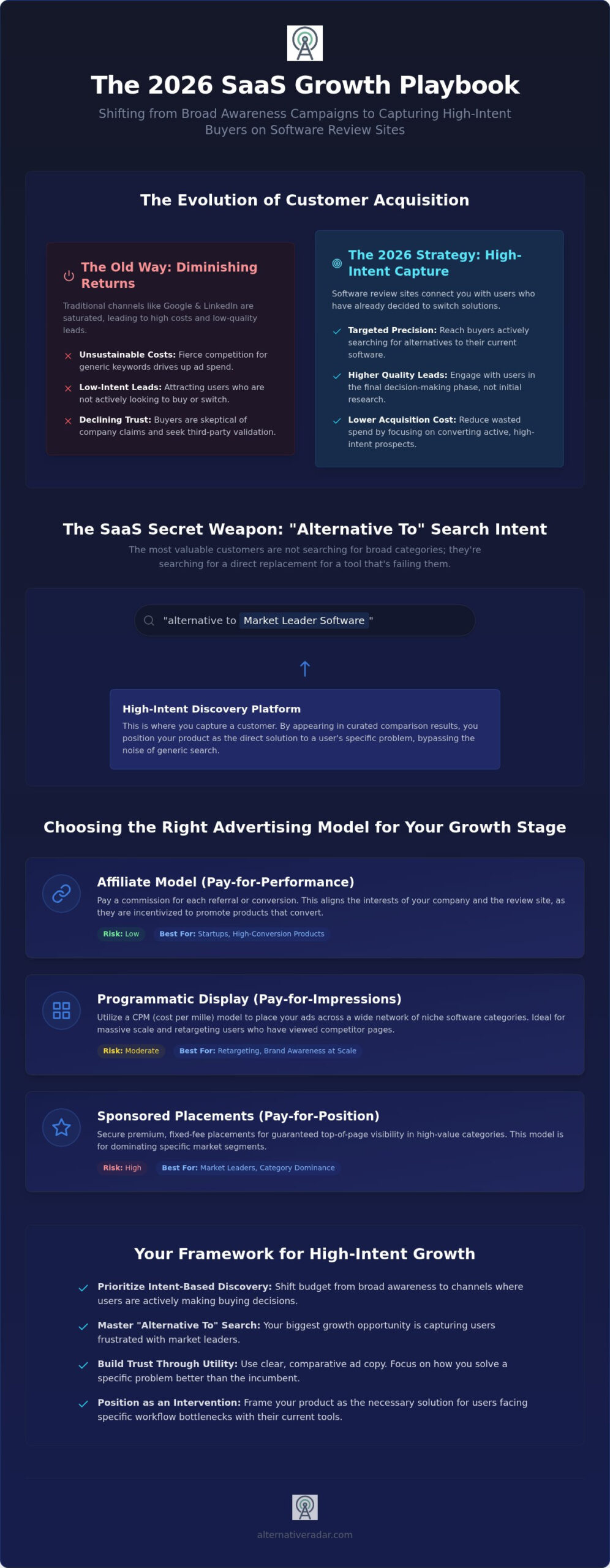
Traditional SaaS growth channels are reaching a point of diminishing returns. Google and Meta were once the gold standard, but high competition has turned them into expensive bidding wars for broad attention. Today, software review site advertising has emerged as a specialized alternative. These platforms have evolved from simple lists into complex media ecosystems that prioritize user utility over marketing budgets. As we move into 2026, the reliance on third-party validation has reached a peak. Buyers don’t trust what a company says about itself; they trust the curated, comparative data found on discovery platforms. This shift requires a new approach to how you allocate your budget across online advertising models to capture users who are ready to make a change.
The Death of the Generic Category Search
The way users interact with search engines has fundamentally changed. Broad queries like “best project management tool” are being replaced by specific, high-intent searches. Most users now search for an “alternative to [Product Name]” when they experience friction with their current provider. Search engines and AI-driven discovery tools now prioritize sites that provide granular comparison data. This shift means that being a market leader doesn’t guarantee visibility; you have to be present when a user is actively looking to switch. If your brand isn’t appearing in these comparison results, you’re losing high-value traffic to competitors who are more visible during the switching phase.
Software Discovery as a Performance Channel
Advertising on review sites is no longer a “brand awareness” play. It has become a core performance channel with clear attribution. Discovery intent is the bridge between problem awareness and purchase. This intent is more valuable than simple curiosity because it indicates a user who is ready to move budget from one solution to another. Instead of casting a wide net, you can target specific segments based on the software they currently use. This precision reduces wasted spend and ensures your message reaches a buyer who is already frustrated with their current limitations.
Integrating this data into your marketing attribution model allows you to see the exact path from a comparison page to a closed-won deal. You aren’t just paying for impressions; you’re paying for a seat at the table during the final decision-making phase. This evolution rewards vendors who focus on transparency and specific use-case suitability rather than those who rely on high-volume, low-quality outreach. By treating review sites as a performance channel, you can lower your overall acquisition costs while improving lead quality.
Advertising Models: Programmatic, Affiliate, and Sponsored
To build a successful software review site advertising strategy, you need to understand the mechanics of how discovery platforms monetize their traffic. Vendors typically choose between three primary models: affiliate recommendations, programmatic display, and sponsored placements. Each serves a different stage of the buyer journey and requires a specific budget approach. These models don’t just provide visibility; they act as a high-quality filter for users who are already deep in the decision-making process. Understanding the technical differences between these options is essential for maintaining a low customer acquisition cost.
Affiliate models operate on a performance basis where you pay a commission for every referral or conversion generated. This model is highly effective for driving high-intent traffic because the review site is incentivized to rank your product where it is most likely to convert. It aligns the interests of the vendor and the publisher perfectly. However, you must ensure compliance with the FTC Endorsement Guides by providing clear disclosures about these financial relationships. Transparency isn’t just a legal requirement; it’s a trust-building mechanism for savvy B2B buyers who value objective comparisons.
Affiliate vs. Programmatic: Which Fits Your Budget?
Affiliate models are often the entry point for startups because they minimize upfront risk. You only pay when a user takes action. In contrast, programmatic display advertising allows for massive scale by placing your ads across a network of niche software categories. Programmatic typically uses a CPM (cost per mille) model, making it ideal for retargeting users who viewed your competitors’ pages. While affiliate traffic is often higher intent, programmatic ads offer the frequency needed to stay top-of-mind during a long B2B sales cycle. Choosing between CPC and CPM depends on whether you value immediate clicks or sustained visibility across the discovery ecosystem. Programmatic models excel when you need to reach users who have visited high-value “alternative” pages but haven’t clicked a direct link yet.
The Power of Sponsored Recommendations
Sponsored software placements are native listings that appear at the top of category pages. These placements bypass “ad blindness” because they look and feel like organic recommendations. To maintain user trust, these featured listings should focus on utility rather than hype. For example, highlighting a specific integration or a unique pricing tier provides more value than a generic “best-in-class” claim. Success here depends heavily on landing page alignment. If your ad promises a specific comparison, your landing page must deliver that exact data immediately. Don’t send high-intent traffic to a generic homepage. Instead, guide them to a dedicated comparison page that reinforces why your solution is the superior choice for their specific needs. If you’re ready to test these high-velocity channels, you can explore sponsored placement opportunities that target active software switchers.
Why ‘Alternative’ Search Intent is the SaaS Secret Weapon
Switching intent represents a higher conversion probability than new-user intent because the buyer already understands the category value. When a user searches for an “alternative to [Product Name],” they aren’t looking to be educated on what the software does. They have already moved past the awareness and consideration phases. They are experiencing friction, such as rising costs, feature bloat, or poor customer support, and are actively seeking a replacement. Software review site advertising allows you to intercept these users at the exact moment their loyalty to a competitor breaks. This is high-velocity traffic that bypasses the traditional, slow-moving sales funnel.
Positioning your software against market leaders requires a focus on suitability rather than aggressive criticism. B2B buyers value objective comparisons that highlight specific use cases where a smaller or more specialized tool might outperform a generic giant. Use your ad placements to emphasize your unique value proposition, such as a more intuitive interface or a transparent pricing model. By framing your product as a necessary intervention for specific productivity bottlenecks, you build trust without resorting to marketing hype. This approach ensures your brand is seen as a viable solution for users who have outgrown their current provider.
Capturing the “I’m Done with This” Moment
Identifying the pain points that drive users away from incumbents is the first step in a successful campaign. Common triggers include sudden price hikes, complex onboarding processes, or the removal of essential features. Comparison lists are the most effective way to address these issues directly. These lists provide the clarity buyers need to justify a switch to their stakeholders. Every search for an alternative is an invitation for a new solution. By highlighting how your tool solves the specific frustrations of a competitor’s user base, you turn their dissatisfaction into your growth opportunity. This strategy is far more efficient than trying to convince a happy user to change their habits.
Alternative Radar: A Case Study in High-Intent Curation
Alternative Radar operates as a digital scout for software switchers, filtering through thousands of options to find the best fit. This platform focuses on the “alternative to” query as its primary driver, ensuring that vendors reach users who are ready to buy. Integrating your product into a comprehensive lead generation campaign often starts with visibility on these discovery sites. There is significant value in being listed alongside free and open-source competitors, as it allows you to demonstrate why your paid features are worth the investment for professional users.
Leveraging Alternative Radar as a strategic discovery tool helps you capture users who might otherwise default to a market leader simply due to brand recognition. The platform’s objective tone mirrors the internal decision-making process of a savvy buyer. It categorizes tools based on technical merit and licensing, providing the precision that general search engines often lack. This environment rewards vendors who prioritize utility and clear comparison data, making it a cornerstone for any 2026 SaaS growth strategy.
How to Optimize Your Ad Strategy for Review Sites
Optimization for software review site advertising starts with moving beyond a “set it and forget it” mindset. You need a structured approach to ensure your placements actually convert high-intent switchers. Start by auditing your current category presence. Don’t just chase the highest traffic volume; instead, look for categories where user dissatisfaction with incumbents is high. Your ad copy must prioritize utility over hype. Buyers in 2026 are immune to generic “best-in-class” claims. They want to see exactly how your feature set compares to their current tool through objective data and clear technical specifications.
Feature parity is the foundation of a successful comparison table. If you’re listed against a market leader, clearly define where you match their capabilities and where you offer a superior alternative. This transparency builds immediate credibility with professional buyers. Tracking ROI is equally critical. You shouldn’t stop at the initial click-through rate. Monitor the transition from discovery to customer lifetime value (LTV) to understand which platforms provide the most resilient users. High-intent traffic from review sites often results in lower churn because the user has already performed the necessary due diligence before signing up.
Selecting Your Categories and Keywords
Targeting alternatives to obscure legacy software is often more profitable than fighting for the top spot in a crowded category. These users are often the most desperate for a modern solution and come with lower acquisition costs. Balance these niche opportunities with high-intent long-tail queries that specify a desired outcome, such as “CRM with built-in automation.” For a practical look at how these technical comparisons function, review this open source CRM software comparison to see how feature sets are weighted for different user needs.
A/B Testing Your Placements and Messaging
Effective software review site advertising requires constant iteration of your call-to-action (CTA). Test “Free Trial” against “Book a Demo” to see which resonates better with your specific audience. While startups often prefer self-serve trials, enterprise buyers may require a guided demo to navigate complex implementation requirements. Use “Pros and Cons” sections to demonstrate objectivity; admitting a minor limitation can actually increase trust in your stated strengths. Add social proof, such as industry awards or badges, to provide the third-party validation that hesitant switchers need to justify their decision to stakeholders.
If you’re ready to improve your visibility among active buyers and reduce your acquisition costs, you can launch your high-intent ad campaign today.
Alternative Radar: Your Partner in High-Intent Growth
Alternative Radar acts as the final filter in the buyer’s journey, bridging the gap between discovery and the final purchase decision. While general directories provide generic lists, we provide the granular comparisons that drive action. We help SaaS vendors navigate the complexities of software review site advertising by offering a platform built on transparency and technical accuracy. Our programmatic display advertising and sponsored software placements ensure your brand is seen by users who have already rejected their current provider. This isn’t just about generating traffic; it’s about facilitating high-velocity growth through precise placement. By positioning your product within our curated ecosystem, you reach buyers who are ready to move their budget from an incumbent to a better solution.
Our helpful, objective advisor tone is a deliberate choice that converts better than traditional marketing hype. Savvy B2B buyers in 2026 aren’t looking for the loudest brand; they’re looking for the most suitable tool. We present your software as a logical intervention for specific productivity bottlenecks, which builds immediate trust. This neutral distance empowers users to make smarter choices, making them more likely to convert and stay loyal to your brand. Partnering with Madunet gives you access to a global reach across business, entertainment, and productivity categories, ensuring your growth isn’t limited by geography or niche.
Leveraging Our Digital Scout Persona
Our “digital scout” approach means we’ve done the heavy lifting of searching and vetting so the user doesn’t have to. This builds a level of trust that standard display networks can’t match. When your tool is featured in our guides for the best free alternatives to photoshop or our comprehensive slack alternatives list, you benefit from an objective endorsement. We prioritize transparency and logic, providing the detailed insights that facilitate faster decision-making for your leads. This environment rewards vendors who value precision and utility, ensuring your UVP is clearly understood by high-intent switchers.
Next Steps for Your 2026 Ad Budget
Integrating Alternative Radar into your programmatic display advertising strategy allows you to scale your outreach without sacrificing lead quality. You can request a media kit today to explore our unique sponsored opportunities and affiliate-linked recommendations. These models are designed for efficiency, helping you lower your customer acquisition costs by focusing on users with active switching intent. Don’t waste your budget on broad awareness when you can capture buyers at the moment they are most likely to switch. Take control of your SaaS growth and partner with Alternative Radar today to reach a global audience of high-intent software buyers.
Master the High-Intent Discovery Funnel
Capturing high-intent users requires moving beyond saturated channels and targeting the exact moment of switching intent. You’ve seen how the evolution of discovery platforms prioritizes objective comparison over broad brand awareness. By leveraging specialized models like programmatic display and sponsored placements, you can significantly lower your customer acquisition costs while reaching a global audience. Implementing a precise software review site advertising strategy allows your brand to stand out as a necessary intervention for users frustrated with their current software stack.
Alternative Radar provides the specialized infrastructure needed to capture these high-value leads. Operated by Madunet since 2012, our platform offers expert curation across more than 50 software categories. We focus on the specialized “alternative” search queries that drive actual conversions, ensuring your budget reaches buyers who are ready to purchase. It’s time to stop chasing broad attention and start capturing active switching intent. Scale your SaaS growth with Alternative Radar advertising and position your software where it matters most. Your next high-value customer is already looking for a better solution; make sure they find your brand first.
Frequently Asked Questions
How much does it cost to advertise on software review sites?
Costs depend on category competition and the specific advertising model you select. Most platforms operate on CPC or CPM structures. Highly competitive categories like CRM or Project Management typically require higher bids to secure top-tier visibility. You should evaluate your budget based on your target customer acquisition cost and the volume of high-intent traffic available in your specific niche.
Is affiliate marketing better than programmatic display for SaaS?
Neither model is objectively superior; they serve different stages of the buyer journey. Performance-based affiliate models minimize upfront risk because you only pay for specific results or conversions. Programmatic display advertising allows for greater scale and the ability to retarget users across multiple categories. Many successful vendors use a hybrid approach to capture both immediate conversions and long-term brand recognition.
How do I get my software listed as an alternative to a competitor?
Getting listed as an alternative usually involves submitting your software to the platform’s editorial team or using sponsored software placements. Focus on highlighting your unique technical capabilities and how they address common frustrations with market leaders. Providing clear data on feature parity helps discovery platforms categorize your tool accurately for users who are actively looking to switch providers.
Can I remove negative reviews on these platforms?
You generally cannot remove legitimate negative reviews from discovery platforms. These sites value objective feedback to maintain user trust and platform integrity. Your best strategy is to respond professionally to provide context or offer a solution. If a review violates the platform’s terms of service, such as containing spam or fraudulent content, you can request a formal moderation review.
What is the average conversion rate for software review site advertising?
Conversion rates for software review site advertising are typically higher than general display networks because the audience possesses active switching intent. These users have already identified a problem and are searching for a specific remedy. While exact rates vary by category, the quality of leads is often superior because the user has already performed initial comparison research before clicking your ad.
How do I track the ROI of my sponsored software placements?
Tracking ROI requires integrating your platform’s data with your internal CRM using UTM parameters. You should monitor the entire journey from the initial click to final conversion and customer lifetime value. This granular data allows you to see which placements drive the most resilient customers. Focus on the cost per qualified lead rather than just the volume of raw clicks.
Do software review sites influence SEO rankings for my brand?
These platforms significantly influence your brand’s SEO through high-authority backlinks and visibility in “best of” search results. Review sites often rank at the top of Google for competitive “alternative to” queries. Being featured prominently ensures your brand appears in the search results that users trust most during their discovery phase, even if they don’t visit your website directly.
What is the difference between a directory and a discovery platform?
A directory is a static list of tools categorized by industry or function. A discovery platform acts as a digital scout by providing comparative data and tailoring results to specific user needs. Discovery platforms prioritize utility and technical comparison, moving users beyond simple awareness toward a confident purchase decision. This approach creates a more efficient path for both buyers and vendors.