
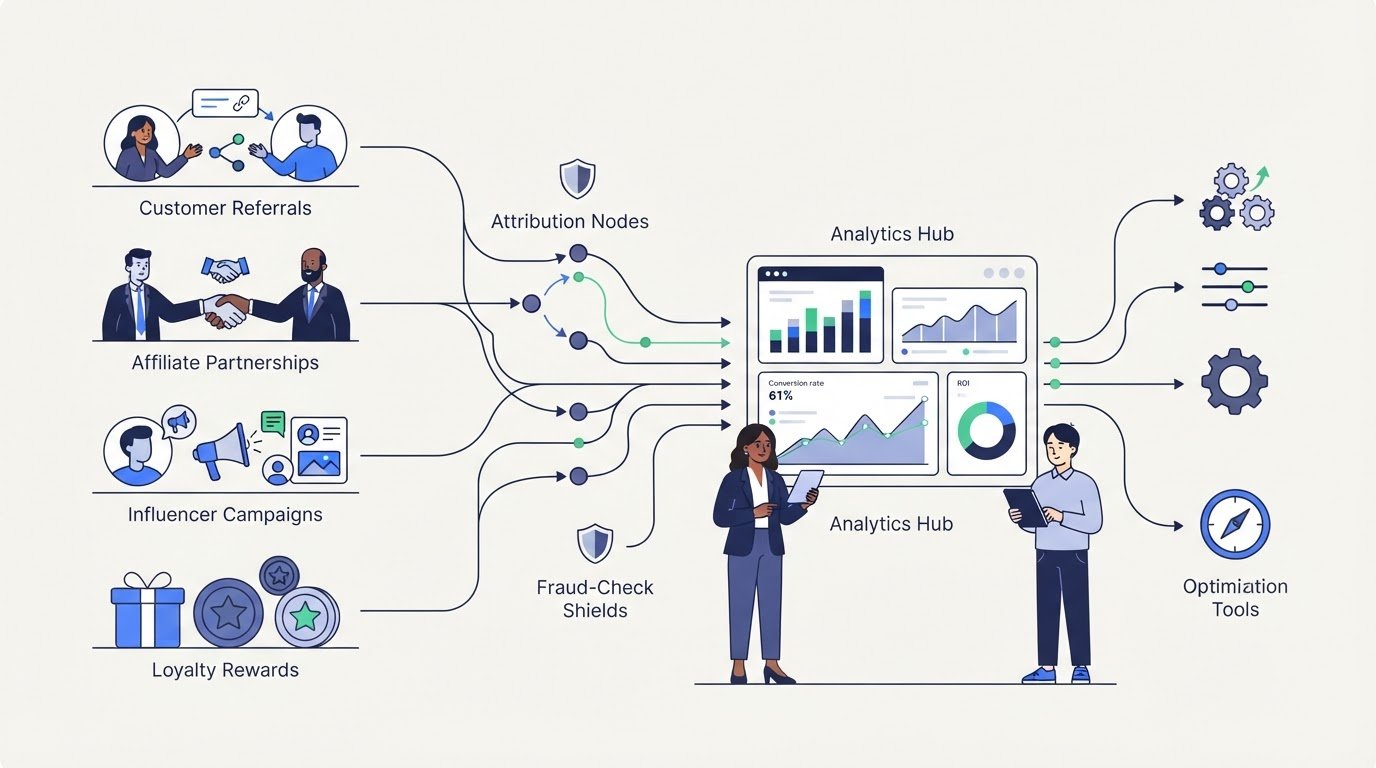
The platform with the most features isn’t automatically the best fit. A useful referral marketing software comparison starts with the program you want to run, then checks whether each platform can track referrals, flag potential fraud before rewards are issued, and show which advocates and channels perform.
Long feature lists don’t always show how a referral program will work in practice. This referral marketing software comparison focuses on fit, not feature counts: customer referral, affiliate, influencer, and loyalty programs can each require different tools and reward rules.
Use this referral marketing software comparison to find platform capabilities that match your goals. The guide compares program types, explains which features matter, and outlines when two-sided incentives can make sense. Narrow your shortlist by program model, attribution, fraud prevention, reporting, and reward flexibility, rather than popularity alone.
Key Takeaways
- Decide whether a reward for both the advocate and new customer fits your margins and the action you want each person to take.
- Match the platform to your program: customer referrals, affiliate partnerships, influencer campaigns, and loyalty programs have different needs.
- Compare pricing structures and trial terms against your expected program use, then assess whether the platform’s integrations fit your existing tools.
- Prioritize capabilities that make results actionable, including referral attribution, fraud checks, and reporting on effective advocates and channels.
Do I need to offer two-sided incentives (rewards for both referrer and referee)?
Not always. A two-sided offer gives the advocate and the new customer a reason to act, but the reward should fit your margin and purchase cycle. For example, a campaign can give a buyer a discount after one successful referral. A flat reward, such as $10 for a successful referral, is another example for small businesses. Compare the cost of each reward with the value of the resulting customer.
Connect the referral platform to your commerce system so it can match an invitation to a completed order. For an online store, link the referral code to checkout and apply the discount only after the qualifying purchase. Then test the full journey, from sharing a link to recording the reward. This ties customer referral tracking to actual transactions, not just clicks.
CRM integration helps personalize communications. Set a step that sends the advocate a confirmation after a friend buys, then tailor the new customer’s message to the product or offer they used. A 30-day attribution window can serve as a planning example, but set the window to match your sales cycle. Keep each message consistent with the brand voice.
Marketing and analytics integrations help you compare channels and advocates. Connect campaign data to your analytics workflow, then review which messages lead to completed orders. To customize the experience, match referral pages and storefront widgets to your existing colors, copy, and discount terms. Consistent design helps the program feel like part of your store, not a separate destination.
For SaaS and subscriptions, connect referral attribution to billing events. The platform should distinguish a trial signup from a paid subscription before issuing a reward. For example, a free-month incentive may suit recurring commerce better than a one-time discount. Set the reward trigger to the event that creates lasting customer value.
| Option | Best fit | Integration priority | Reward approach |
|---|---|---|---|
| Two-sided | New-customer growth | Checkout and CRM | Reward both parties |
| Referrer-only | Existing loyalty | CRM and analytics | Reward advocates |
| Subscription | Recurring plans | Billing system | Reward paid conversions |
Choose a two-sided incentive when both audiences have a clear reason to participate and your integrations can verify the qualifying action.
Referral, affiliate, influencer, and loyalty programs
Choose a program based on who shares, what action earns a reward, and how results connect to revenue. A referral platform may support several models, but each has different tracking and administration needs.
Referral and Affiliate Programs
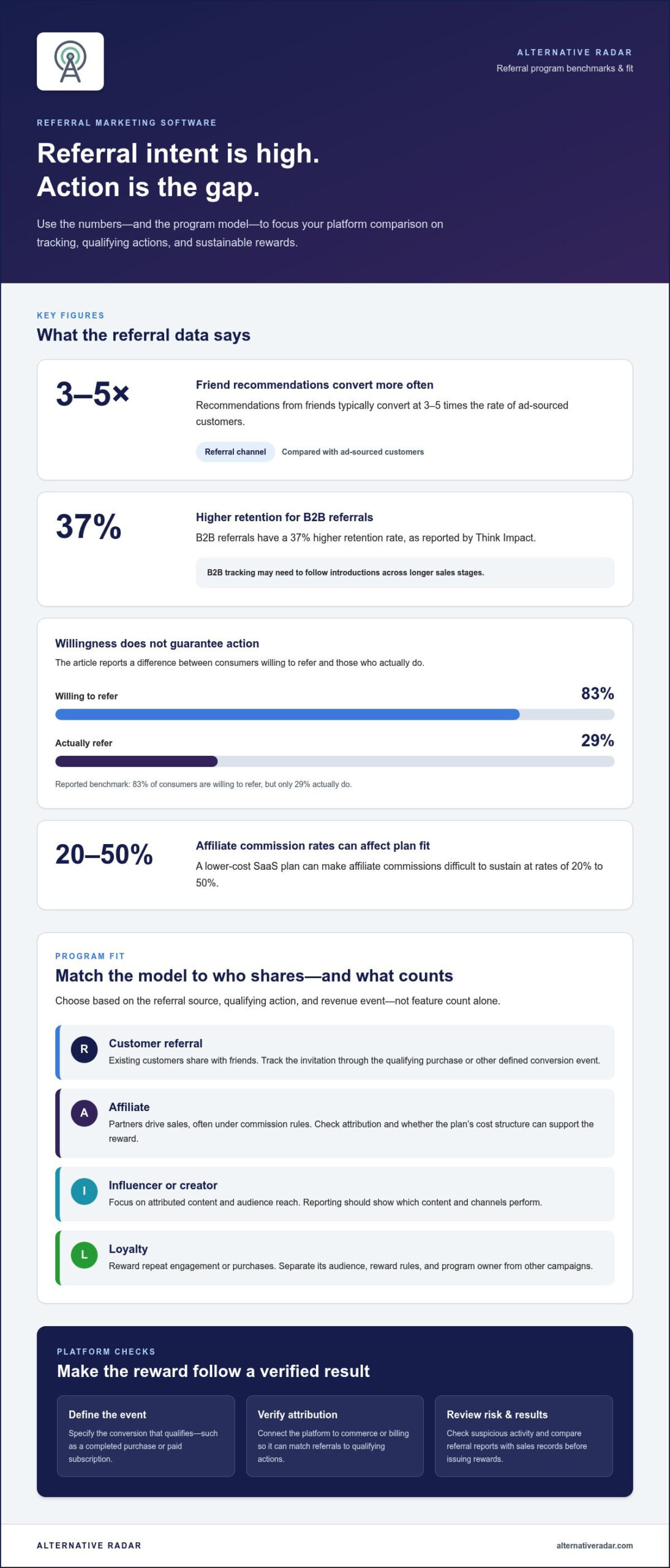
A customer referral program rewards existing customers for sharing with friends; an affiliate program tracks partner-driven sales, often through commission rules. Influencer or creator programs focus on attributed content and audience reach, while loyalty programs reward repeat engagement or purchases. Compare the sharing method and qualifying action first. Recommendations from friends typically convert at 3-5 times the rate of ad-sourced customers. For broader software discovery, explore software discovery resources.
Customer, B2B, and Enterprise Referrals
Customer programs turn individual buyers into advocates, while B2B programs track introductions between businesses and often need longer sales-stage attribution. Enterprise programs may involve multiple teams, approval steps, and separate reward rules across business units. Design around the referral source and the revenue event that qualifies. B2B referrals have a 37% higher retention rate, as reported by Think Impact.
Multiple Programs and License Costs
Running customer, affiliate, and loyalty programs together can widen channel coverage, but it also adds campaign setup and reporting work. Separate each program’s audience, attribution rules, reward type, and owner before launch. Then compare the platform’s licensing structure with the number of programs and users you need. A lower-cost SaaS plan can make affiliate commissions difficult to sustain at rates of 20% to 50%.
Software Limitations and Risks
Referral software can attribute actions and manage rewards, but it can’t create customer advocacy by itself. Poorly matched incentives may attract low-quality sharing, while weak tracking can credit the wrong channel or issue rewards before a qualifying sale. Reduce these risks by defining the conversion event, reviewing suspicious activity, and checking reports against sales records. One useful benchmark: 83% of consumers are willing to refer, but only 29% actually do.
What is the best referral marketing software?
The best fit balances program features, predictable pricing, and setup effort. A referral marketing software comparison should weigh each plan’s structure against your program needs.
Pricing Plans and Platform Costs
Platforms may charge a recurring subscription, usage-based fees, or a combination of the two. Compare included programs, user access, integrations, and analytics before weighing the headline price. A Shopify store, for example, may prioritize checkout connections, while a partner program may need commission tracking. Use a referral marketing software comparison to match expected usage with essential features and plan limits.
Trials and Subscription Pricing
A trial lets you test workflows before committing to a subscription. Use it to create a referral link, send test emails, and trace a completed purchase into analytics. Check that the trial includes the integrations and reports your team needs. Recurring plans can make budgeting easier, while usage-based charges may change as referrals grow. Compare billing frequency, plan limits, and cancellation terms together.
Success Fees and Setup Time
Some platforms charge a success fee based on attributed revenue; others use a subscription without that fee model. Compare the fee trigger carefully: a signup, first purchase, or recurring payment can lead to different totals. Setup time also depends on integrations, reward rules, and storefront changes. List your tools, then map each connection and campaign step before estimating the work.
Privacy, Data Security, and Compliance
In the United States, privacy and security obligations depend on the data collected, how it is used, and the rules that apply. Compare how a platform handles customer details, referral activity, access permissions, and data retention. Before launch, document what information enters the system, who can access it, and how referral emails are managed. This helps you assess both tracking and data handling.
Referral software features and capabilities
Evaluate a referral platform by how it connects sharing to verified outcomes. Tracking should link an advocate’s invitation to a new lead or customer, then record the qualifying conversion. For example, follow a shared link from an ecommerce landing page through checkout to the resulting order.
Attribution rules determine which referral gets credit when a customer uses multiple channels. Before launch, define the conversion event and attribution window, and decide how the platform handles a referral code shared after an initial click. Test the process with a sample campaign to make sure reports reflect your intended rules.
Fraud checks matter before issuing rewards. Review whether the software can flag self-referrals, duplicate accounts, or unusual activity, then add a manual review step for flagged claims. This helps reduce the risk of rewarding activity that doesn’t represent a genuine new customer.
- Tracking: Follow an advocate’s link, code, or campaign invitation to a conversion.
- Integrations: Connect ecommerce and marketing tools so order and campaign data can be compared.
- Reporting: Identify which advocates and channels produce completed purchases, not only clicks.
- Rewards: Match incentives to customer preferences, such as free months, extra features, or early access.
Use campaign reports to decide what to adjust. If email sharing generates clicks but few purchases, compare its conversion path with another channel before changing the reward. If a particular advocate brings qualified customers, use that insight to refine your outreach. A useful referral software comparison prioritizes actionable reporting over a long feature list.
Before choosing, test the same sample referral across tracking, integrations, fraud review, and reporting. Compare software options to narrow your shortlist by the capabilities your campaigns need.
Alternative Radar: Programmatic display advertising
Alternative Radar helps software brands reach readers through programmatic display advertising, sponsored software placements, and affiliate-linked software recommendations. These options complement referral campaigns when your goal also includes reaching people exploring software. For example, sponsored placements can present a software option to readers comparing tools, while display advertising supports broader audience reach.
Use these channels when you want to increase software discovery or make a relevant product easier to find. They serve a different role from referral software: they support advertising and recommendations rather than managing referral attribution, rewards, or technical integrations. Compare them with your campaign objective, audience, and existing marketing mix to decide on the next step.
Visit alternativeradar.com to explore its software advertising and recommendation options.
Turn Your Shortlist Into a Growth Plan
Define what success should look like after launch. Set a clear goal, such as qualified referrals, repeat engagement, or stronger software discovery, then assign someone to review campaign results and adjust the plan. This turns a referral marketing software comparison into a practical decision, not just a feature checklist.
Referral software focuses on program mechanics. If your broader goal is to reach people actively exploring software, consider complementary promotion channels. Alternative Radar offers programmatic display advertising, sponsored software placements, and affiliate-linked software recommendations. These can support discovery alongside a referral program, while serving a different role from referral tracking and reward management.
Choose the next step that matches your priority. If software promotion is part of your plan, contact Alternative Radar to explore its advertising and recommendation options. Keep your goal clear, compare each channel against it, and move forward with a plan your team can measure and refine.
Frequently Asked Questions
What are the best referral marketing software platforms in 2026?
The best platform supports your program model and fits your existing workflow. A retailer focused on repeat purchases may prioritize store and loyalty connections, while a SaaS team may need subscription-event tracking. Compare finalists with the same sample campaign: invite a customer, record a referral, and trace the resulting action through your sales process.
How do leading referral marketing tools compare on features and ease of use?
Compare how easily your team can build a campaign, change reward rules, and understand the results. Marketers should be able to find referral activity without relying on an analyst to create a custom report. Review the everyday workflow, not just the feature list: create a test campaign, adjust its message, and locate its performance data.
Which referral platforms integrate with Shopify, Salesforce, HubSpot, and other popular tools?
Integration support varies by platform, so compare each connection with the data your program needs. For a Shopify store, trace an order from checkout into referral attribution. For Salesforce or HubSpot, examine how a referred contact appears in the CRM and how sales outcomes flow back into campaign reporting. Distinguish native connections from connectors or custom implementations.
What reward types and fraud-prevention features do referral tools offer?
Rewards can include discounts, free subscription months, extra features, or early access. Choose an incentive that matches the action you want, such as a completed purchase rather than a link share. Fraud controls should allow review before rewards are issued. For example, flag a referral when the advocate and new account appear to use the same customer details.
Which referral software is best for ecommerce, SaaS, and small businesses?
Ecommerce teams should prioritize order attribution and reward handling at checkout. SaaS businesses should focus on subscription events, such as a referred account becoming a paying customer. A small business may prefer a straightforward campaign workflow its existing team can manage. Compare software against the business’s main conversion event, rather than choosing by company size alone.
How long does it take to set up a referral marketing program with software?
Setup time depends on how ready your campaign rules, creative assets, and integrations are. A simple store campaign needs a defined reward, referral message, and checkout test. A program connected to a CRM and subscription billing needs additional event mapping and validation. Create a launch checklist, test a referral from invitation through reward approval, and resolve gaps before promoting the program.