

The most feature-packed affiliate platform isn’t automatically the best fit. Affiliate marketing tracking software records clicks, leads, purchases, and other conversion events generated by partners. It helps businesses attribute results and calculate commissions. The right choice depends on how well its tracking and reporting match your program.
It’s easy to focus on dashboards or headline features, but practical differences show up in attribution methods, supported conversion events, commission rules, and payout workflows. This guide explains how tracking software handles those tasks and what to compare before choosing a platform. You’ll learn how affiliate links, cookies, tracking pixels, and server-to-server postbacks capture activity, what reporting can reveal, and which features matter for your setup. The goal is to help you identify a tool that fits your program, rather than judging by feature lists alone.
Key Takeaways
- Match a platform to your business model and program needs, starting with the conversion events you need to track.
- Compare commission options and payout workflows to see how each platform supports your partner terms.
- Assess attribution methods and reporting together, since tracking setup affects how clearly you can interpret performance.
- Prioritize the features that fit your workflow instead of choosing by the length of a platform’s feature list.
What Is Affiliate Tracking Software?
Affiliate tracking software records clicks, leads, purchases, and other conversion events generated by partners. It links events to affiliate identifiers, then organizes results for commission calculations and program reporting. For example, an online store can attribute an order to a partner link, while a SaaS company can track a qualified trial signup.
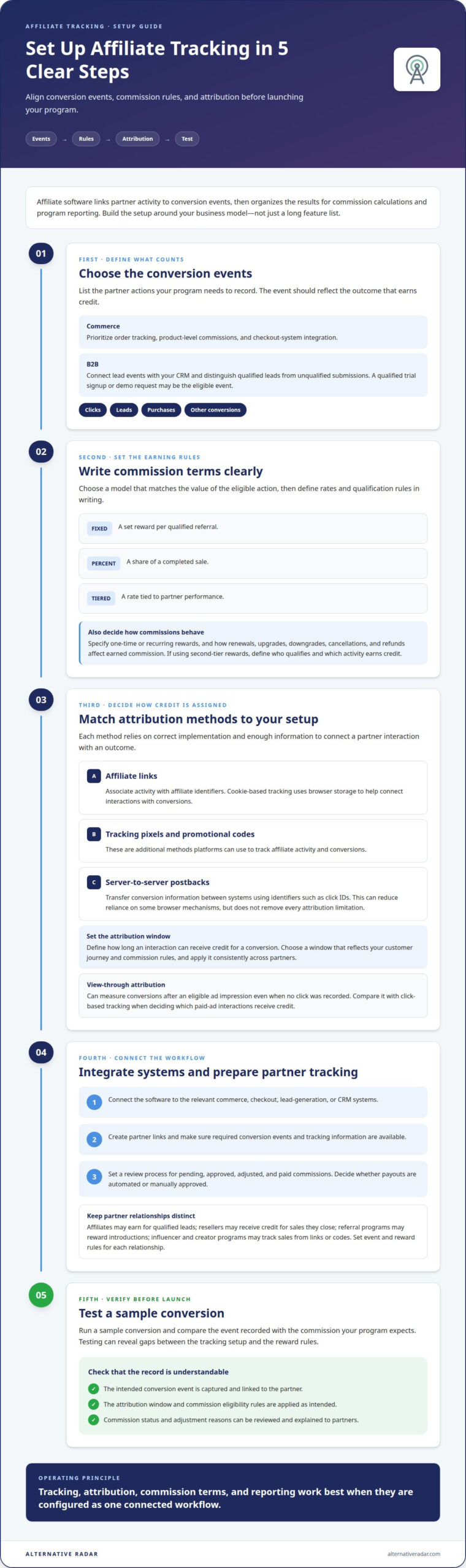
Choose a solution around your business model and program needs. A commerce business may prioritize order tracking, product-level commissions, and integration with its checkout system. A B2B company may need to connect lead events with its customer relationship management system and distinguish qualified leads from unqualified submissions. Review the conversion events and technical integrations your program depends on before comparing features.
Pricing structures may depend on program size, tracked activity, or available features. Free tiers may limit partner accounts, conversions, integrations, or reporting access. Compare those limits with your workflow, not just the advertised starting plan. A program that handles payouts manually has different requirements from one that needs integrated payment workflows.
To configure an affiliate program, define eligible conversion events, commission terms, attribution settings, and partner rules. Connect the tracking solution to the relevant commerce or lead-generation systems, create partner links, and test a sample conversion. Testing can reveal gaps between the event recorded and the commission your program expects.
B2B affiliate, referral, and reseller programs need distinct structures. A B2B affiliate may earn commission for a qualified lead; a reseller may receive credit for a sale they close. Referral programs often reward customer introductions, while influencer and creator programs may track sales from links or codes. Set event and reward rules that reflect each partner relationship.
In the United States, FTC endorsement guidance calls for clear, conspicuous disclosure of material connections, including affiliate compensation, where consumers will notice it.
Common fraud risks include fabricated leads, duplicate conversions, and self-referrals. Software can flag unusual patterns, compare conversion records, and apply program rules before commissions are approved. These controls can help identify suspicious activity, but accurate setup and review still matter.
Commission structures and payouts
A commission plan defines which partner actions earn credit and how payouts work. Configure the platform around clear terms, attribution rules, and adjustment processes.
Commission Models and Rates
Common structures include a fixed reward per qualified referral, a percentage of a completed sale, or a tiered rate tied to performance. Choose the model that matches the value of the action, such as a B2B demo request or an ecommerce order. Set each rate and eligibility rule in writing. If a second-tier commission rewards partners for referring other partners, define who qualifies and which activity earns credit.
Recurring and One-Time Commissions
A one-time commission rewards a single eligible event, such as a completed purchase or approved referral. A recurring commission applies to ongoing customer payments, which can suit subscription programs. Decide whether recurring rewards continue after renewals, upgrades, or account changes. Then configure the platform to link each eligible payment to the original referral and display commission status clearly.
Commission Adjustments and Tracking
Customer account changes can affect earned commission. Define how upgrades, downgrades, cancellations, and refunds change the record, then map each event to a rule. For example, a refund may reverse commission tied to that purchase, while an upgrade may change the eligible transaction value. Use integration event records to make adjustments traceable and distinguish a reversal from a new commission.
Make payout operations easy to audit. Set a review process for pending, approved, adjusted, and paid commissions, and give partners a clear view of their status. Automated payouts can reduce routine administration, while manual approval may suit programs that review referrals before payment. Share commission terms and adjustment reasons in partner communications. Clear records help resolve questions without changing the agreed attribution or reward structure.
Affiliate attribution and performance reporting
Attribution connects partner activity to conversions, while reporting shows how that activity performs. Align tracking methods, conversion events, and reporting parameters before launch.
Attribution Methods
Affiliate platforms can track activity through affiliate links, tracking pixels, promotional codes, and server-to-server postbacks. Cookie-based tracking uses browser storage to help associate interactions with conversions. A postback transfers conversion information between systems using identifiers such as click IDs. Each method depends on correct implementation and on the information available to connect a partner interaction with an outcome.
Some platforms also support view-through attribution. It measures conversions after an eligible ad impression, even without a recorded click. For paid-ad attribution, compare this approach with click-based tracking and decide which interactions should receive credit. Server-to-server tracking can reduce reliance on some browser mechanisms, but it doesn’t remove every attribution limitation.
Conversion Tracking Windows
An attribution window defines the period in which a recorded interaction can receive credit for a conversion. Set the window to reflect your customer journey and commission rules, then apply it consistently across partners. A short consideration cycle may differ from a B2B sale involving several follow-up steps. Don’t assume one default fits every program.
Before recruiting partners or launching a custom campaign, confirm that tracking captures each required conversion event. A software program might count a paid subscription, while a lead-generation campaign may count a completed application. Test the integration with sample clicks and conversions, then confirm the resulting records use the intended partner identifier and attribution window.
Performance Reporting
Reporting should connect clicks to conversions and show which partner sources contribute to outcomes. Compare reports by affiliate, campaign, conversion event, and attribution method. For example, separating view-through conversions from click-attributed conversions makes the crediting logic easier to interpret. Useful reporting depends on choosing parameters that match the decisions your affiliate management team makes.
Use reports to identify partners generating relevant activity, then refine recruitment and campaign structures. Review gaps between click records and conversion records, especially when systems use different integrations. A powerful dashboard can still mislead if event names, identifiers, or attribution settings don’t align. Keep the setup consistent so comparisons reflect partner performance, not configuration differences.
Affiliate software feature comparisons
There is no single best affiliate tracking platform for every business in 2026. The strongest choice is the one that fits your program model, conversion events, integrations, commission structures, and reporting needs.
For Shopify, WooCommerce, Stripe, and other tools, an integration must pass relevant conversion information into the tracking system. Compare the supported connection method and confirm it can associate events with the partner identifiers you need.
Start with fit, not feature count. A growing ecommerce program may prioritize reliable order tracking and revenue reports. A B2B program may value lead qualification and CRM connections instead. Check that each candidate supports your conversion events, attribution settings, and reporting parameters before weighing extras.
- Tracking: Compare link, pixel, postback, and promotional-code support against your traffic and checkout flow.
- Commissions: Check whether the platform accommodates your commission structures, including recurring or event-based rewards.
- Reporting: Look for dashboards that separate clicks, conversions, partners, and campaign results.
- Administration: Compare partner management, payout workflows, and access to commission records.
- Integration: Confirm that the system can receive the conversion information your business needs.
Test each shortlisted solution with a representative conversion before launch. For example, place a test order or submit a test lead, then trace it from the partner identifier to the report and commission record. This shows whether the integration captures the event and displays it consistently. A feature that doesn’t support your actual workflow adds complexity without improving decisions.
Compare plan limits with expected program activity, too. A free tier may restrict features or usage, so assess how those limits affect tracking, partner management, and reporting as your program grows. Avoid choosing on price alone. The key question is whether the available functions support your workflow.
Use these criteria to narrow the field and compare software options by fit, features, and reporting capabilities.
There is no universally best affiliate tracking platform in 2026. The best fit depends on your program model, conversion tracking and integration needs, commission structures, reporting, and expected activity.
Alternative Radar: Affiliate-linked software recommendations
Alternative Radar helps readers discover and compare software options through affiliate-linked recommendations. If you’re narrowing down tracking platforms, use its software insights to assess features, pricing, and pros and cons against your program’s needs. Clear comparisons can help you identify relevant options without treating a longer feature list as a better fit.
Alternative Radar also offers sponsored software placements and programmatic display advertising. These services support software discovery, while its recommendations offer a comparison-oriented way to explore products. Use them when you’re ready to move from understanding commissions, attribution, and reporting to reviewing software options.
Explore software options and compare their differences with Alternative Radar.
Make Your Next Software Decision With Confidence
Your program will change as partner needs, customer journeys, and business priorities evolve. Treat affiliate marketing tracking software as part of an ongoing decision process, not a permanent choice. Revisit whether the platform still fits the work your team needs to do. Clear priorities can make future comparisons faster and more relevant.
When exploring software, Alternative Radar helps you discover and compare options through affiliate-linked recommendations. Its offerings also include sponsored software placements and programmatic display advertising, giving software businesses different ways to connect with interested audiences.
If you’re planning your next step in software discovery or promotion, contact Alternative Radar to discuss your needs. Keep your criteria clear, make a considered choice, and move forward with confidence.
Frequently Asked Questions
What is affiliate marketing tracking software and how does it work?
Affiliate tracking software connects partner referrals with outcomes, such as a signup or purchase, so a business can assign credit and manage commissions. For example, a software company can create separate links for a newsletter and a creator campaign, then compare which source produced qualified trials. That comparison depends on consistent event names and identifiers across connected systems.
How do affiliate tracking software features compare, including attribution, reporting, and fraud detection?
Compare features by how they support your workflow, not by quantity. Attribution options determine how interactions receive credit, while reporting tools shape which sources and outcomes you can analyze. Fraud controls may flag unusual activity, but rules vary by platform. For a practical comparison, test the same sample referral in each system and inspect its recorded source, conversion, and commission status.
How much does affiliate tracking software cost in the United States?
Costs vary by platform and plan, so compare the pricing structure with expected usage rather than relying only on a starting tier. Factors may include tracked activity, partner limits, available reporting, and integrations. Free plans may restrict capabilities needed for a live program. Map essential workflows first, then assess which plan supports them without paying for features your team won’t use.
Which affiliate tracking platforms are best for small businesses, SaaS companies, and ecommerce brands?
The best fit depends on how each business earns revenue and records partner outcomes. A small business may prioritize manageable administration; a SaaS company may need to track trials and paid subscriptions; an ecommerce brand may focus on order-level records and refunds. Compare platforms against those workflows, then test a representative referral before deciding. Avoid choosing solely by popularity or feature count.
How do you set up affiliate links, tracking pixels, and conversion tracking?
Start by defining the conversion that earns credit, such as a completed order or approved signup. Create partner links with unique identifiers, add tracking pixels where the conversion occurs, and connect events to the reporting system. Then run a test referral through the full customer journey. Confirm that the source, event, and resulting record align, and correct any mismatch before inviting partners.
How does affiliate tracking handle cookies, cross-device attribution, and browser privacy restrictions?
Cookie-based tracking uses browser storage to help associate interactions with conversions, so browser settings can affect what gets recorded. Cross-device attribution is limited when systems can’t connect activity across devices using available identifiers. Server-to-server postbacks can reduce reliance on some browser-based methods, but they don’t bypass every privacy restriction or attribution limitation. Correct implementation and usable attribution information remain essential.