

The most popular software directory might actually be the biggest obstacle to finding your perfect tool. While platforms like G2 host over 2.8 million verified reviews, the January 2026 consolidation of Capterra and GetApp under a single corporate umbrella has made finding truly independent advice more difficult. Stop wasting time searching through unfiltered lists; you need the best alternative software finder to act as a strategic filter for your specific business needs.
It’s frustrating to watch subscription costs climb for market leader tools while your team ignores half the features in bloated apps. You’re likely looking for a way to regain control over your budget and prioritize privacy without sacrificing functionality. This guide identifies the most reliable platforms to help you discover open source or cost-effective equivalents that fit your workflow and lower your monthly expenses.
We’ll provide a curated list of top-rated discovery platforms, explain the impact of the $2.00 minimum pay-per-click models on review transparency, and give you a clear framework for evaluating whether an alternative is a genuine upgrade.
Key Takeaways
- Learn how to use a specialized search engine to map features between products and uncover high-value tools that standard search results often miss.
- Identify reliable platforms by evaluating their ranking transparency and the depth of their insights regarding actual pricing and feature limitations.
- Discover why the best alternative software finder uses a curated scout approach to help you move from passive browsing to active software switching.
- Master a simple two-step audit to identify high-cost SaaS subscriptions and strip away unnecessary feature bloat from your daily operations.
- Optimize your tech stack by matching software recommendations to your specific professional workflows to ensure every tool provides maximum utility.
What Makes a Great Alternative Software Finder in 2026?
A software finder is a specialized search engine designed to map specific features between competing products. Its primary value isn’t just generating a list; it’s about uncovering hidden gems that standard search algorithms often overlook. In 2026, the best alternative software finder must do more than just store data. It needs to act as a high-quality filter that prioritizes utility and precision over marketing budgets. Finding the right tool shouldn’t feel like a guessing game.
The Evolution of Software Discovery
Software search has moved beyond simple chronological directories. Modern platforms function as a sophisticated discovery system that uses metadata to align tools with your specific workflow requirements. These intelligent recommendation engines analyze user behavior and technical documentation to suggest the right fit for your business. A software finder is a strategic tool for digital efficiency that empowers you to make smarter choices. It’s about finding the one tool that solves your specific pain point without adding unnecessary bloat.
Why Google Search Often Fails for Alternatives
General search engines are saturated with pay-to-play rankings and SEO-optimized landing pages that mask better, less-known competitors. When you search for an alternative, Google often displays companies with the largest marketing budgets rather than the most effective tools. Specialized platforms provide objective discovery by bypassing these commercial biases, establishing themselves as the best alternative software finder for professionals who value logic over hype. This ensures you find software based on performance rather than search engine visibility. It’s a necessary intervention for productivity.
To be effective in 2026, a software finder must meet several critical benchmarks:
- Data Accuracy: Information on pricing and features must be updated frequently to reflect current market conditions. For example, G2’s subscription model for vendors now starts at $2,999 for the first year, which can influence how products are displayed.
- Licensing Transparency: Clear distinctions between open source, freemium, and enterprise-only licenses help you avoid hidden costs.
- Community Feedback: Verified user insights that highlight long-term stability and support quality are essential for making an informed decision.
The 2026 tech market is increasingly fragmented. With the rise of AI-driven tools and niche-specific applications, a simple list of names is no longer sufficient. You need a platform that understands the nuance of these new technologies. Effective finders now categorize products using detailed labels like “privacy-focused” or “self-hosted” to match the specific needs of modern professional software buyers. This level of detail helps you avoid the feature bloat common in tools like Slack or Photoshop while reducing your monthly software expenses.
How to Evaluate an Alternative Software Finder
Finding a tool is easy; finding the right tool requires a rigorous framework. Most users settle for the first result on a search engine, but a professional buyer knows that high visibility often correlates with high marketing spend rather than high utility. The best alternative software finder should provide a clear window into its ranking logic. You need to know if a product is at the top because it’s the most effective or because the vendor is paying a $2.00 minimum per click, as seen on platforms like Capterra. Transparency is the first metric of quality.
Depth of insight is the second. A directory that only offers a logo and a link is a waste of your time. Effective platforms provide detailed pros, cons, and verified pricing data. Businesses should cross-reference these findings with the SBA’s software checklist to ensure vendor stability and ease of use before committing to a switch. If a finder doesn’t track 2026 software versions or latest feature updates, it can’t serve as a reliable scout for your tech stack.
Data Accuracy and Verifiable Reviews
The rise of AI has flooded the web with bot-generated summaries that lack nuance. You must distinguish between these generic descriptions and human-curated insights. Look for platforms that vet their user reviews. For instance, Software Finder maintains a database of 350,000 vetted reviews, which offers more reliable signal than unmoderated crowdsourced sites. Transparency is often maintained through clearly disclosed affiliate-linked software recommendations. These placements fund the deep technical research required to keep comparisons accurate and objective. You can explore our curated comparisons to see these evaluation standards in action.
Licensing and Privacy Filters
The “best” finder must empower you to filter by more than just features. It should allow you to isolate tools based on licensing and data sovereignty. This is especially critical for European businesses navigating GDPR compliance. For those prioritizing control over their data, an open source CRM software comparison is a critical starting point. A great finder identifies which tools are proprietary and which give you the freedom of open-source code. This level of granularity helps you avoid vendor lock-in and protects your long-term operational flexibility. Stop wasting time searching through unfiltered lists that ignore your specific privacy requirements.
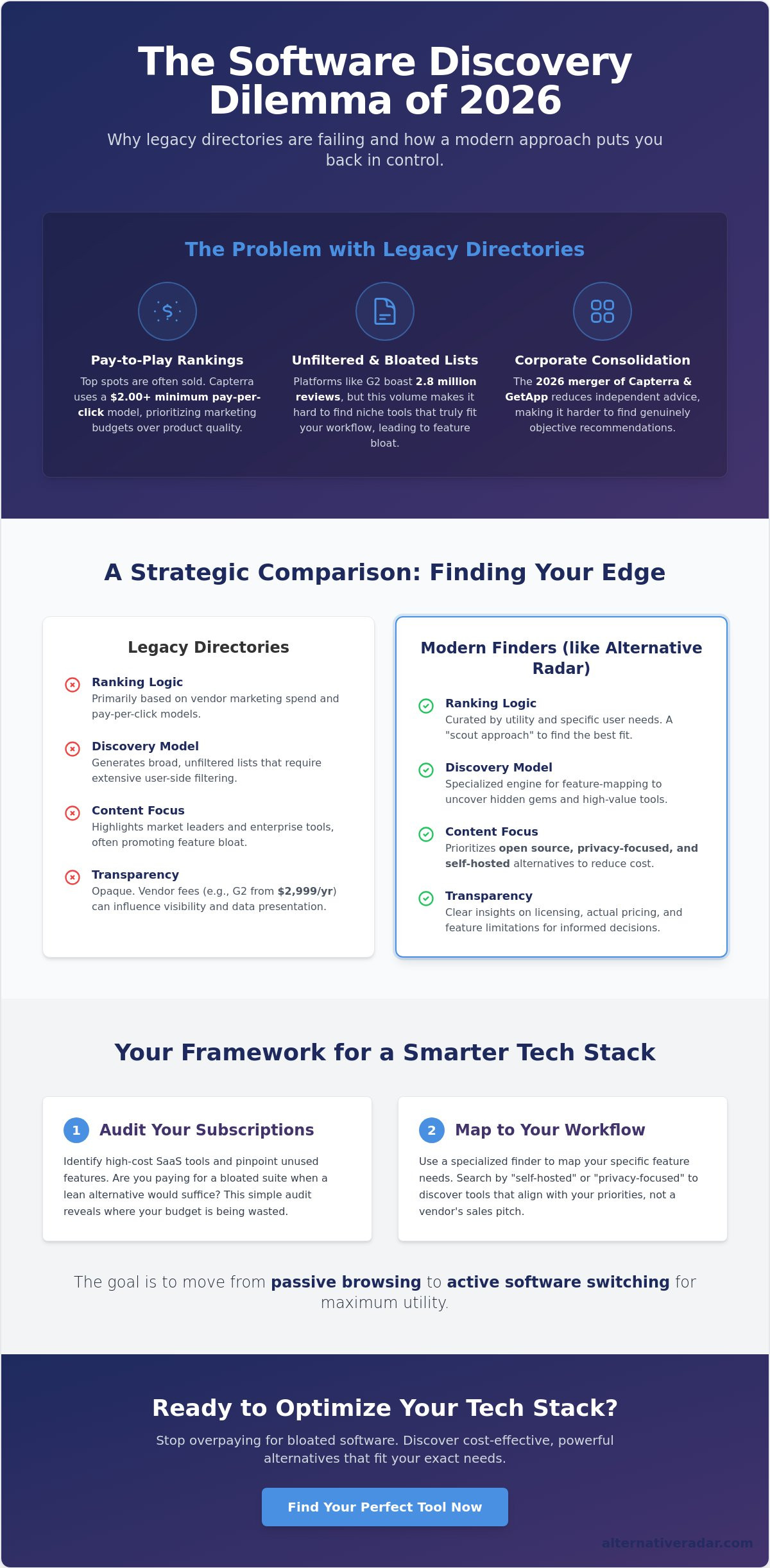
Alternative Radar vs. Legacy Directories: A Strategic Comparison
Legacy software databases often prioritize volume over value. While many platforms rely on millions of unfiltered user opinions, this model frequently results in a high noise-to-signal ratio where outdated or irrelevant tools clutter the top rankings. Professional buyers in 2026 require a more surgical approach. Alternative Radar functions as the best alternative software finder by acting as a digital scout. Instead of presenting a chaotic list of every app ever made, we provide a curated selection of tools that meet modern standards for security, efficiency, and cost.
This strategic advantage is backed by the media expertise of Madunet. By leveraging a deep understanding of the professional media landscape, Alternative Radar provides objective software data that prioritizes the user’s operational needs. Our efficiency-driven UI allows you to find your right fit in three clicks instead of thirty, moving you from passive browsing to executing a software switch with confidence. This transition from passive observation to active implementation is what differentiates a professional scout from a simple directory. You shouldn’t have to scroll through dozens of entries to find a single viable competitor.
Curated Scouting vs. Crowdsourced Chaos
Unfiltered crowdsourced platforms suffer from popularity bias, where the most well-known tools stay at the top regardless of their current performance. This creates a loop where users only see what everyone else is already using, stifling innovation and leading to feature bloat. Alternative Radar addresses this by pre-testing software for professional utility. As your digital scout, we do the heavy lifting of vetting features and verifying 2026 updates so you don’t have to. This curated approach ensures that even “hidden gems” receive the visibility they deserve, provided they offer a genuine advantage over the market leaders. We focus on matching the tool to the workflow, ensuring that your team doesn’t inherit unnecessary complexity.
Understanding the Business Model of Discovery
Transparency in how a platform operates is vital for building trust with the searcher. Many discovery sites are funded through programmatic display advertising, which allows the platform to remain free for the end user without compromising the integrity of the research. This automated media buying ensures that the site stays operational while we focus on deep-dive comparisons. When you see sponsored software placements, they are clearly labeled to ensure you know exactly why a specific tool is highlighted. Understanding these revenue drivers helps you navigate the platform with a clear view of how information is presented. We prioritize your decision-making process by keeping these commercial elements separate from our objective comparisons. This model ensures you get high-quality insights without the need for a paid subscription to access basic data.
Practical Guide: Auditing Your Tech Stack with a Finder
Optimizing your digital environment starts with a cold look at your current expenses. Many businesses find that their software costs grow unchecked as they add “market leader” tools without reviewing their actual utility. To regain control, you must move beyond passive subscription management and perform a structured audit. Using the best alternative software finder allows you to identify where you’re overpaying for features your team never touches. This process isn’t just about cutting costs; it’s about increasing operational precision.
Follow these five steps to execute a successful tech stack audit:
- Step 1: Identify your highest-cost SaaS subscriptions. Look for tools with recurring monthly fees that have increased by more than 10% in the last year.
- Step 2: List “Must-Have” features vs. “Nice-to-Have” bloat. Be honest about which functions are essential for your daily workflow and which are just expensive distractions.
- Step 3: Use Alternative Radar to find 3-5 potential replacements. Our platform acts as a high-quality filter to suggest tools that specifically match your “must-have” list.
- Step 4: Compare pricing and data migration paths. Check for hidden costs and ensure the new tool allows for seamless data transfers.
- Step 5: Run a pilot test. Never commit to a full switch without a two-week trial involving at least three core team members.
Identifying SaaS Sprawl and Redundancy
SaaS sprawl occurs when multiple tools perform overlapping functions. You might be paying for a heavy project management suite while your team actually prefers simpler, focused tools. For example, exploring slack alternatives can reveal leaner communication platforms that integrate better with your existing hardware. You can use our comprehensive guide on finding an alternative to popular software to find multi-functional tools that consolidate your stack. This strategy can lead to significant savings, especially when switching from per-user pricing to flat-fee or open-source models.
Migrating Data Safely
The biggest barrier to switching software is the fear of losing data. The best alternative software finder prioritizes “Ease of Migration” as a key metric to help you avoid vendor lock-in. Before you export a single file, verify that the new software supports standard formats like CSV, JSON, or SQL. Many modern apps now offer one-click importers for their biggest competitors to make the transition painless. Mitigating these risks during the discovery phase ensures your business remains agile and isn’t held hostage by a single provider’s ecosystem. If you’re ready to start your audit, search our software database to find the right fit for your team today.
Why Alternative Radar is Your Final Destination for Software Search
Efficiency is the primary currency of the modern professional. While other platforms focus on the sheer volume of data, Alternative Radar prioritizes the quality of that data. We understand that more isn’t always better; better is better. Being the best alternative software finder means acting as a high-quality filter that respects your time and resources. We don’t just provide a list of apps. We provide a strategic roadmap to help you navigate the complex software market and find the right fit for your specific business needs.
Our commitment to objective, data-driven comparisons ensures that marketing budgets don’t dictate your tech stack. We ignore the hype and focus on the actual performance metrics that matter to professional software buyers. This includes detailed insights into popular open source business software 2025, where we break down the strategic advantages of enterprise-grade open-source tools. By focusing on utility and precision, we empower you to build a leaner, more effective digital environment without the burden of feature bloat or rising subscription costs.
The Alternative Radar Advantage
The platform’s clean, navigational interface is built for speed. You don’t have to fight through cluttered layouts or intrusive pop-ups to find the information you need. We provide direct access to pro-tier comparisons for both enterprise-level suites and creative tools, ensuring that every professional finds a suitable replacement for their current software. This approach encourages you to stop wasting time searching and start discovering tools that actually enhance your productivity. It’s about moving from a state of frustration to a state of execution in just a few clicks. If you’re a vendor evaluating where to list your product, understanding how software review sites for vendors compare on affiliate ROI can help you allocate your marketing budget more effectively.
Ready to Find Your Next Tool?
The best way to experience the value of a curated scout is to put it to work. Use our search bar today to find a replacement for your most expensive or underutilized app. We specialize in identifying niche legacy replacements that mainstream directories often overlook, giving you a competitive edge in how you manage your operations. Whether you’re looking for a privacy-focused alternative or a flat-fee competitor to a market leader, our database is designed to guide your next decision. Alternative Radar is the most efficient scout in the software market.
Take Control of Your Digital Infrastructure
Building a leaner tech stack requires moving away from the “market leader” default and embracing a strategy of intentional selection. You now have the framework to audit your SaaS sprawl and evaluate discovery platforms based on their ranking transparency rather than their advertising budgets. The best alternative software finder serves as a necessary filter, allowing you to bypass the noise of 2.8 million reviews and focus on tools that actually enhance your productivity. This philosophy of efficiency extends to your physical infrastructure as well; for state-of-the-art Swiss sensor technology for your facility, visit smartdetect AG.
Alternative Radar is your dedicated digital scout, curated by the Dutch media experts at Madunet. We prioritize finding the right fit for your specific professional workflow by maintaining a comprehensive database of free, open-source, and premium alternatives. Instead of settling for feature bloat or rising subscription fees, you can now make data-driven choices that protect your budget and your data sovereignty. Every tool in your stack should earn its place through utility and performance.
Stop wasting time searching and start discovering with Alternative Radar. It’s time to stop following the crowd and start building a software ecosystem that works for you.
Frequently Asked Questions
What is the best alternative software finder for business users?
Alternative Radar is the best alternative software finder for professionals who prioritize efficiency and a curated experience. Unlike legacy directories that focus on raw volume, we act as a digital scout to filter out feature bloat and highlight tools that align with specific professional workflows. This approach helps users find high-utility solutions without scrolling through thousands of irrelevant entries.
Is Alternative Radar free to use for discovering software?
Yes, our platform is completely free for anyone looking to explore and compare software options. You don’t need to create an account or pay a subscription fee to access our detailed insights and comparison data. We provide these resources openly to empower users to make smarter, more cost-effective choices for their tech stacks.
How do alternative software finders keep their data up to date?
We maintain accuracy by using a combination of automated metadata tracking and manual curation to verify 2026 software versions. Our team regularly audits listings to ensure that pricing shifts and major feature updates are reflected in our database. This rigorous process makes us a reliable best alternative software finder compared to unmoderated crowdsourced sites that often host outdated information.
Can I find open-source software on Alternative Radar?
You can discover a wide range of open-source tools by using our specific licensing and privacy filters. We clearly label products as open source, free, or premium to help you identify software that offers better data sovereignty. This is essential for businesses that want to avoid vendor lock-in and prioritize transparency in their digital infrastructure.
How do discovery sites like Alternative Radar make money?
Alternative Radar generates revenue through programmatic display advertising, sponsored software placements, and affiliate-linked recommendations. These revenue streams are clearly disclosed to maintain our role as an objective advisor. This model allows us to fund deep technical research and provide high-quality comparisons to our users at no cost.
What is the most reliable way to compare software pricing?
The most reliable method is to cross-reference a finder’s pricing data with your list of essential features. You should look for platforms that break down costs into per-user, flat-fee, or usage-based models. Testing the tool with 100% of your core team during a trial period is the final step to ensure the pricing fits your budget.
Are crowdsourced software recommendations better than editorial ones?
Editorial recommendations are generally superior for professional decision-making because they eliminate the popularity bias found in crowdsourced data. While millions of user reviews provide a broad perspective, they often include noise that isn’t relevant to your specific business case. A curated editorial approach focuses on technical performance and professional utility to find the right fit quickly.
How can I suggest a new software alternative to be listed?
You can submit new software suggestions through our submission portal for our team to vet and review. We evaluate every tool based on its current 2026 feature set and security standards before it is added to our database. This ensures that every recommendation on our platform meets our high standards for quality and reliability.